
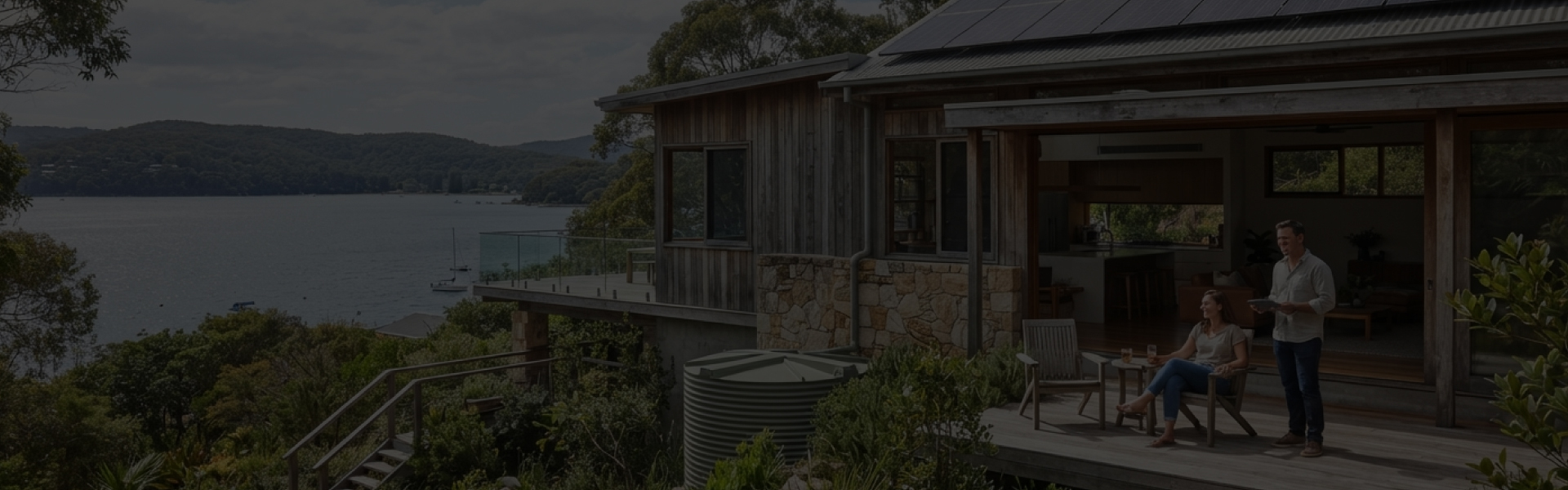

Building sustainable houses isn’t just about choosing energy-efficient products. For a new build or knockdown rebuild in Lake Macquarie, you need to design the house for the conditions of your particular block.
This means considering factors like the direction your home faces, coastal exposure, and the amount of shade from existing trees. Addressing these factors during the design stage itself can help you reduce avoidable construction work and create a home that performs well in the local Australian climate.
This guide by The Rubix discusses nine practical design strategies that you should consider for sustainable home design in Lake Macquarie.
9 Design Strategies for a Sustainable House in Lake Macquarie
Some practical design strategies that you can incorporate in your sustainable house in Lake Macquarie include:
1. Assess Your Lake Macquarie Block before Designing the Home
Every block of land in the Lake Macquarie region has its own microclimate. So, before finalising your sustainable home design, carefully evaluate your site's specific slope, soil type, drainage, and mature trees.
You must also look out for localized climate factors like coastal salt spray, wind exposure, or specific bushfire requirements (BAL ratings). Mapping these elements early ensures that you design your home for the land instead of forcing a generic layout onto it.
2. Position Your Home to Make Better Use of the Site
Smart orientation is the most effective, zero-cost way to boost your home’s lifetime efficiency. You should consider :
- North-Facing Living - Always position your main living spaces and large glass doors facing North. This lets the low winter sun Sun flood into your home to warm it naturally, while the high summer sunSun hits the roof rather than the glass.
- Zoning - Group your secondary utility spaces like the garage, laundry, and bathrooms along the South or West walls to act as a thermal buffer against harsh afternoon heat and biting winter winds.
If you’re planning on rebuilding, you can check our guide to the Benefits of Sustainable Knockdown Rebuild Homes in Australia.
3. Design Outdoor and Indoor Spaces to Work Together
For sustainable houses in Lake Macquarie, the line between your indoor and outdoor spaces should blur seamlessly. Plan your decks, alfresco dining areas, and courtyards to expand your livable space without growing the footprint of your building envelope.
You can use deciduous trees or vine-covered pergolas on the Northern and Western sides. They’ll provide lush, cool shade during hot summer days but drop their leaves to allow winter sunlight to pour directly onto your indoor living areas.
4. Plan for Passive Cooling during Warmer Months
Lake Macquarie enjoys beautiful afternoon North-Easterly sea breezes. You can harness these to keep your home cool without investing too much in mechanical cooling. You can accomplish this through:
- Cross-Ventilation - Place windows on opposite or adjacent sides of a room to invite air to move naturally through the house.
- Thermal Mass - Incorporate heavy, high-density materials like a polished concrete slab or feature brick walls inside the home where they can soak up daytime warmth and slowly release it during cooler nights.
Insulation, roof design, external shading, and ceiling fans can support these strategies because coastal breezes are not always available or suitable. This will help your sustainable home design to maintain comfort during still, humid weather.
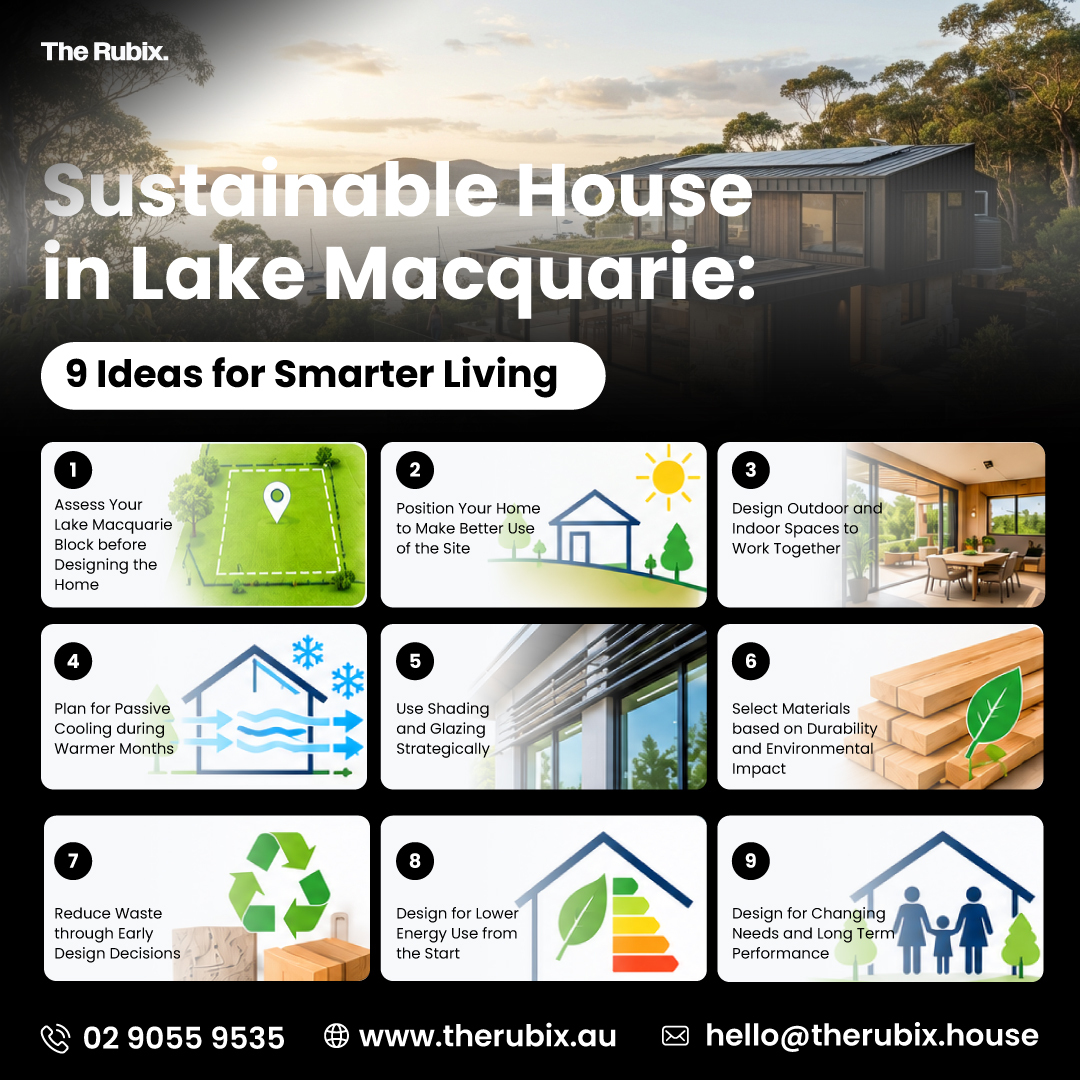
5. Use Shading and Glazing Strategically
Windows are responsible for up to half of a home's heat loss or gain. You should therefore plan for:
- High-Performance Glazing - Invest in double-glazed windows or triple glazed windows in cooler areas and low-e (low emissivity glasses) to reduce solar heat gain in sunny areas. Combine this with timber frames for better insulation and thermal performance.
- Eaves and Louvres - Design custom eaves or external, adjustable louvres. Eaves should be calculated precisely so they block the hot summer rays completely but allow the lower winter Sun to pass straight underneath.
Your building designer can help you get these details right for an eco-friendly and energy efficient build.
6. Select Materials based on Durability and Environmental Impact
The environmental impact of a home depends partly on the materials used to build it and how long these materials perform before requiring repair or replacement. You should therefore consider the resources needed to manufacture and transport your building materials, their expected service life, maintenance requirements and potential for reuse or recycling.
As properties in Lake Macquarie can be exposed to coastal conditions, they need materials and finishes that can withstand the salt-laden air and moisture. Appropriate detailing, corrosion-resistant components, and suitable protective finishes can help to reduce premature deterioration.
Check out our guide to Sustainable Building Materials to learn which materials you can use for different parts of your sustainable home.
7. Reduce Waste through Early Design Decisions
Building waste is a significant environmental issue that can be mitigated dramatically during the drafting phase. Discuss material quantities, prefabricated components, and opportunities for reuse with your building designer and builder early in the project.
If you’re planning home renovation or knockdown rebuild, your existing property may also contain materials or components worth salvaging, depending on their condition, safety, and suitability for reuse. Make sure you assess these materials before the demolition of your house.
Check out our Knockdown Rebuild Checklist for a detailed insight into what you should prepare before demolition.
8. Design for Lower Energy Use from the Start
For designing sustainable houses you need to plan for low energy use from the start. This includes planning for insulation, airtightness where appropriate, efficient glazing, external shading, and well-planned ventilation to maintain comfortable temperatures indoors.
Appliances and building services matter too. Using energy-efficient lighting, suitable heat-pump hot water systems and correct sized heating and cooling equipment helps reduce ongoing electricity use. You should also consider adding solar photovoltaic systems and rain water harvesting systems.
9. Design for Changing Needs and Long Term Performance
Consider flexible rooms, accessible circulation, practical storage, and spaces that can serve more than one purpose. It is also worth thinking about how the home will accommodate future improvements, such as additional solar capacity, electric vehicle charging or any upgrades to the energy systems.
Long-term performance also depends a lot on maintenance. Roof drainage, weatherproofing, ventilation, external finishes, and landscaping should be designed with the site's conditions in mind.
If you’re considering using eco-friendly materials like Cross Laminated Timber (CLT), you can check our guide to learn the 7 Essential CLT Construction Details for Stronger Builds.
Can a Knockdown Rebuild Be a Sustainable Choice in Lake Macquarie?
A knockdown rebuild can definitely be a sustainable option for Lake Macquarie when your existing home no longer meets your needs and substantial renovation would be difficult or inefficient.
Starting with a new design also creates opportunities to improve the building's orientation, thermal performance, water efficiency, and use of materials. However, demolition and rebuilding also consume resources and generate waste.
The overall environmental impact of this sustainable knockdown rebuild will depend on the condition of your existing house, the extent of work required, the proposed sustainable home design, and whether you are using any eco-friendly, prefabricated materials like Cross Laminated Timber.
Before deciding though, you should compare the practical feasibility of renovation with rebuilding. You can check our guide to Home Renovation vs Knockdown Rebuild Sydney for a deeper comparison of the two.
Why Choose a Building Designer for a Sustainable Home in Lake Macquarie?
A building designer is the right person to consult when you’re planning a sustainable home design. They can help translate your sustainability goals into practical decisions according to your block, household needs, and budget. Their design process also brings elements like energy efficiency, sustainable materials, landscaping, and room layout together for an eco-friendly home from the beginning.
For Lake Macquarie homeowners, this process may involve assessing solar access, working with the site's slope, planning for natural ventilation, and identifying constraints that could affect the proposed home.
A building designer can also coordinate your design with the relevant consultants and help incorporate applicable planning and building requirements. At The Rubix, we believe in creating sustainable homes that respond to their surroundings, support everyday comfort of its residents, and perform well over time.
If you're considering a new home or knockdown rebuild in Lake Macquarie, contact The Rubix to discuss your project and get a thoughtful sustainable home design.
Frequently Asked Questions
1. What makes a house sustainable in Lake Macquarie?
A sustainable house in Lake Macquarie combines proper insulation, all-electric and renewable energy systems, passive solar design, and materials built to withstand a warm temperate and lakeside climate.
2. How can I design a more energy efficient home in Lake Macquarie?
To design a more energy efficient home in Lake Macquarie, you need to account for the region's specific temperate coastal climate. This includes combining smart architectural orientation with modern electrification to reduce and eventually eliminate your energy bills.
3. What should I consider before designing a sustainable home?
Before designing a sustainable home, you should consider the orientation of the site, its natural conditions, the building envelope's thermal efficiency, and the life-cycle impact of the materials you are building with.
4. Is a sustainable design suitable for a knockdown rebuild?
Yes, a sustainable design is suitable for a knockdown rebuild. As you start from a clean slate, you can easily integrate passive solar orientation, high-performance insulation, double glazing, and modern eco-friendly materials for a sustainable house.
5. How can sustainable design improve comfort at home?
Sustainable design improves comfort at home by facilitating a stable indoor temperature, maximising natural light, and enhancing air quality.
6. When should sustainability be considered in the home design process?
You should consider sustainability from the very beginning of the home design process so that everything works together to create a healthier and durable home.